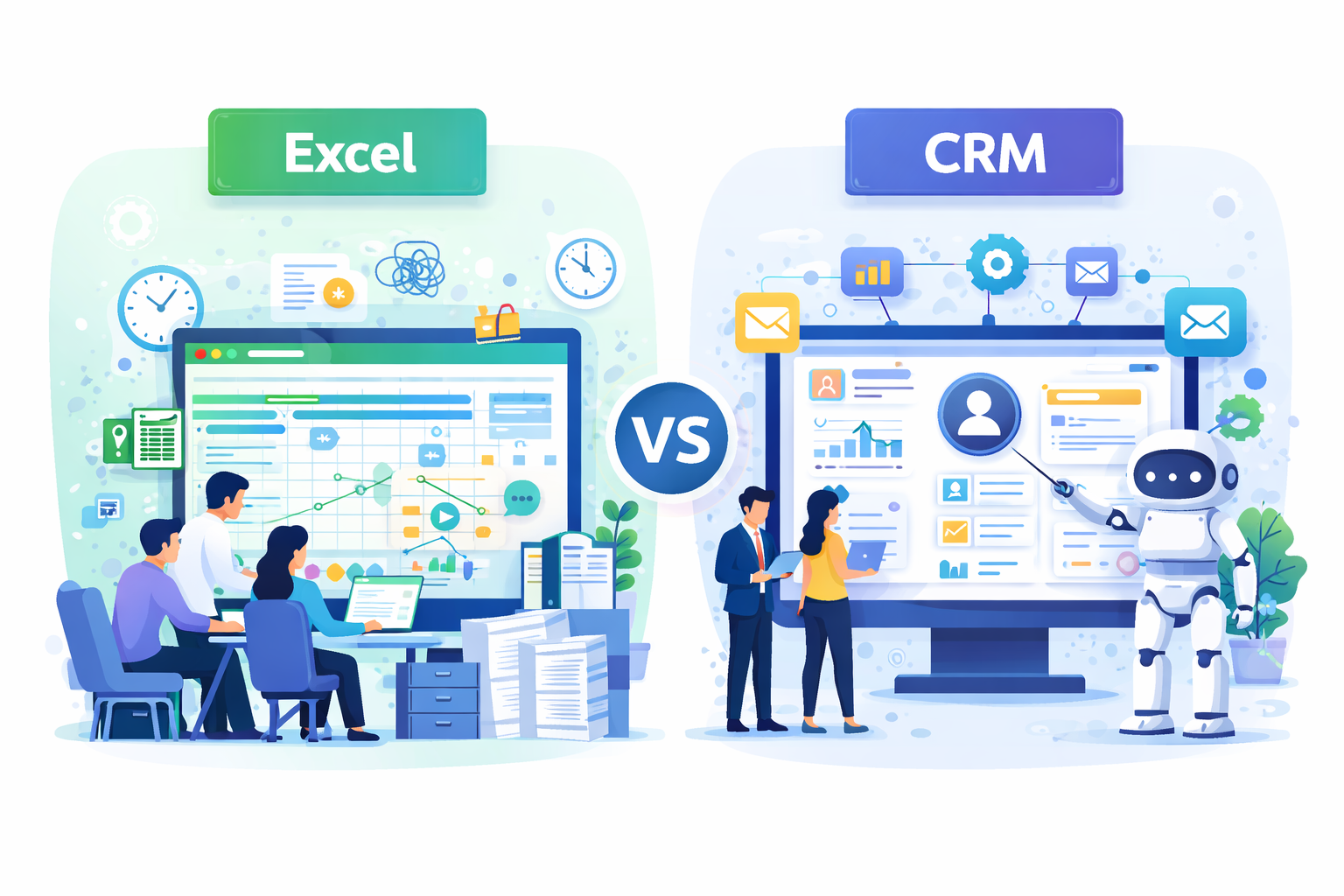
CRM vs Excel: Which Is Better for Growing Businesses?
Introduction
Many businesses begin by managing customer information using spreadsheets. While Excel is useful in the early stages, it becomes increasingly difficult to manage customer relationships, sales opportunities, and team collaboration as the business grows.
A Customer Relationship Management (CRM) system is specifically designed to organize customer data, automate workflows, and help businesses scale efficiently.
Why Businesses Start With Excel
Excel is familiar, accessible, and easy to use.
Businesses commonly use spreadsheets to:
Store customer information
Track leads
Manage sales records
Create simple reports
However, as customer data grows, spreadsheets become harder to maintain and prone to errors.
Limitations of Excel
Manual Updates
Every change must be entered manually, consuming valuable time.
Difficult Team Collaboration
Multiple team members working on the same file can create confusion and version control issues
No Automation
Excel cannot automatically send follow-ups, assign leads, or manage customer journeys.
Limited Reporting
Generating meaningful business insights requires manual analysis.
Advantages of a CRM
Centralized Customer Data
All customer information is stored in a single platform accessible to authorized team members.
Sales Pipeline Management
Track every lead from inquiry to conversion with complete visibility.
Workflow Automation
Automate repetitive tasks such as follow-up emails, lead assignments, and reminders.
Better Reporting and Analytics
CRM systems provide real-time dashboards that help businesses make data-driven decisions.
Improved Customer Experience
Respond faster and provide personalized interactions using complete customer histories.
When Should You Move to a CRM?
Your business should consider a CRM if:
Customer records are growing rapidly
Multiple employees access customer data
Follow-ups are becoming difficult to manage
Sales opportunities are being missed
Reporting takes too much time
CRM and Business Growth
Businesses that implement CRM systems often experience:
Improved sales efficiency
Better customer retention
Increased productivity
Enhanced team collaboration
Greater visibility into business performance
Conclusion
Excel is a great starting point, but growing businesses need tools designed for scalability. A CRM provides the automation, visibility, and efficiency required to manage customer relationships effectively and support long-term growth.
Ready to move beyond spreadsheets? WynStack CRM helps businesses organize customer data, automate workflows, and accelerate growth with a modern CRM platform.